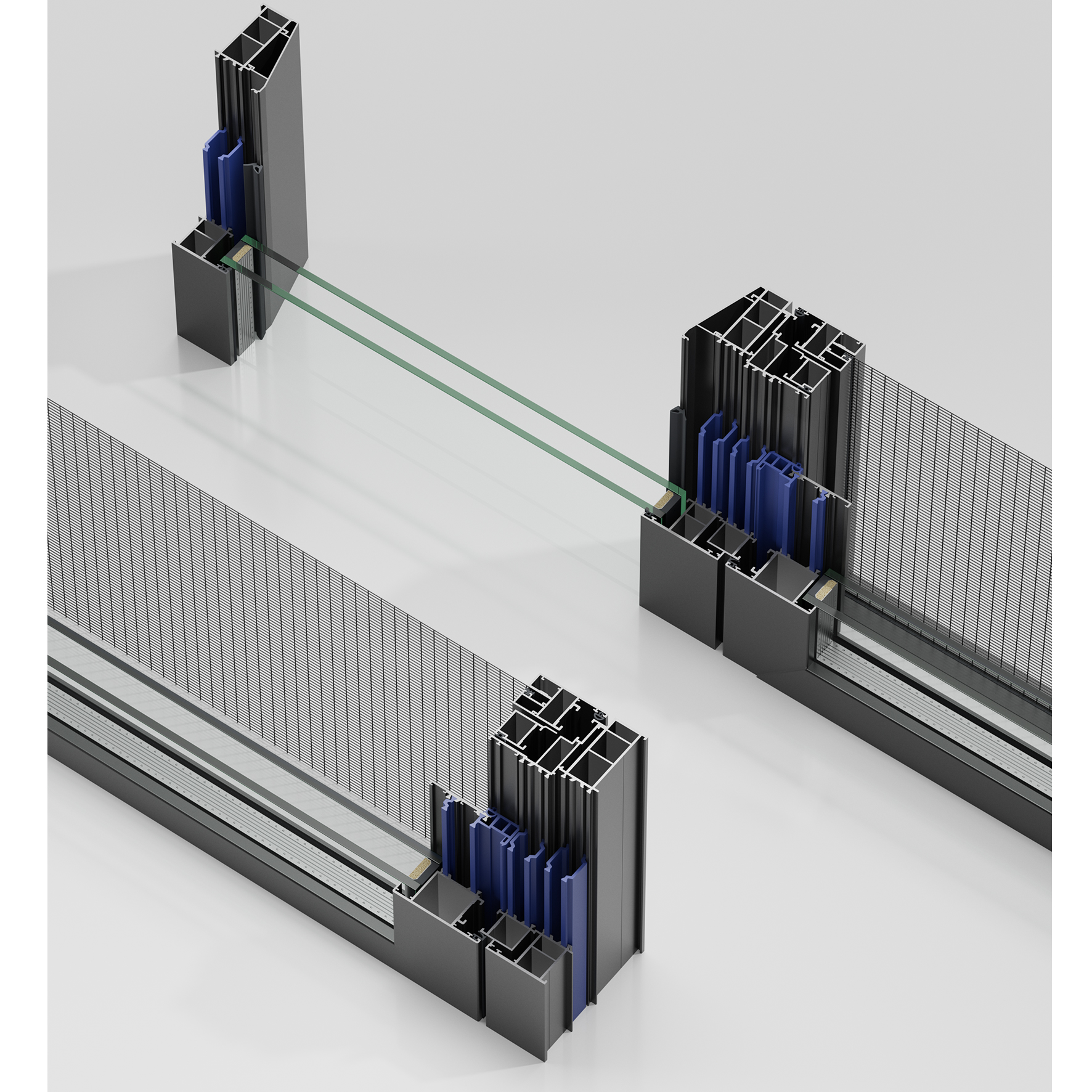
Thermal break aluminum profiles for projects that need better insulation, more indoor comfort and less condensation. Two aluminium shells, one inside and one outside, are joined by an insulating barrier so heat cannot run straight through the metal.
What are thermal break profiles?
Thermal break profiles are aluminium extrusions made as two shells, one inside and one outside, joined by an insulating barrier so heat cannot run straight through the metal. Ours use glass-fibre reinforced PA66 polyamide strips rolled into 6063-T5 extrusions (the insert-strip method), matched with EPDM seals and argon-filled insulated glass. Systems: 55 series, 115 / 125 series, 120 sliding and 126 side pressure.
See also: Thermally broken aluminium windows · Powder coated aluminium windows · Aluminum sliding door profile
Glass-fibre reinforced PA66 polyamide strips slide into grooves in the two extrusions and are rolled in. Strip width sets the insulation depth; the strips carry the load between the halves.
Liquid polyurethane is poured into a channel in one extrusion, cured, and the aluminium bridge below is cut away.
Our systems use PA66 strips on 6063-T5 extrusions, matched with EPDM seals and insulated, argon-filled glass, because thermal performance belongs to the whole system, not the profile alone. Without a break the frame is a cold bridge in winter and a hot surface in summer, and condensation forms inside.
| System | Type | Specification |
|---|---|---|
| 55 series | Casement window and door | 55 mm frame, PA66, EPDM, argon-filled glass, EN RC3 |
| 115 / 125 series | Casement window | 115–125 mm frame, 2.0 mm walls |
| 120 sliding window | 2- and 3-rail sliding | 6063-T5, 1.4 / 1.8 mm walls, 80 / 120 mm frame, PA66 barrier |
| 126 side pressure | Side pressure sliding | 6063-T5, 1.8 mm walls, PA66 strips, 41 mm glazing rabbet |
Thermal break or not? Choose thermally broken profiles for heated or air-conditioned rooms, hot or cold climates and energy-code or condensation requirements. Non-thermal profiles, such as our 70 series casement and 132 ultra-narrow sliding window, cost less, allow slimmer sightlines and suit shaded areas, interiors and mild climates.
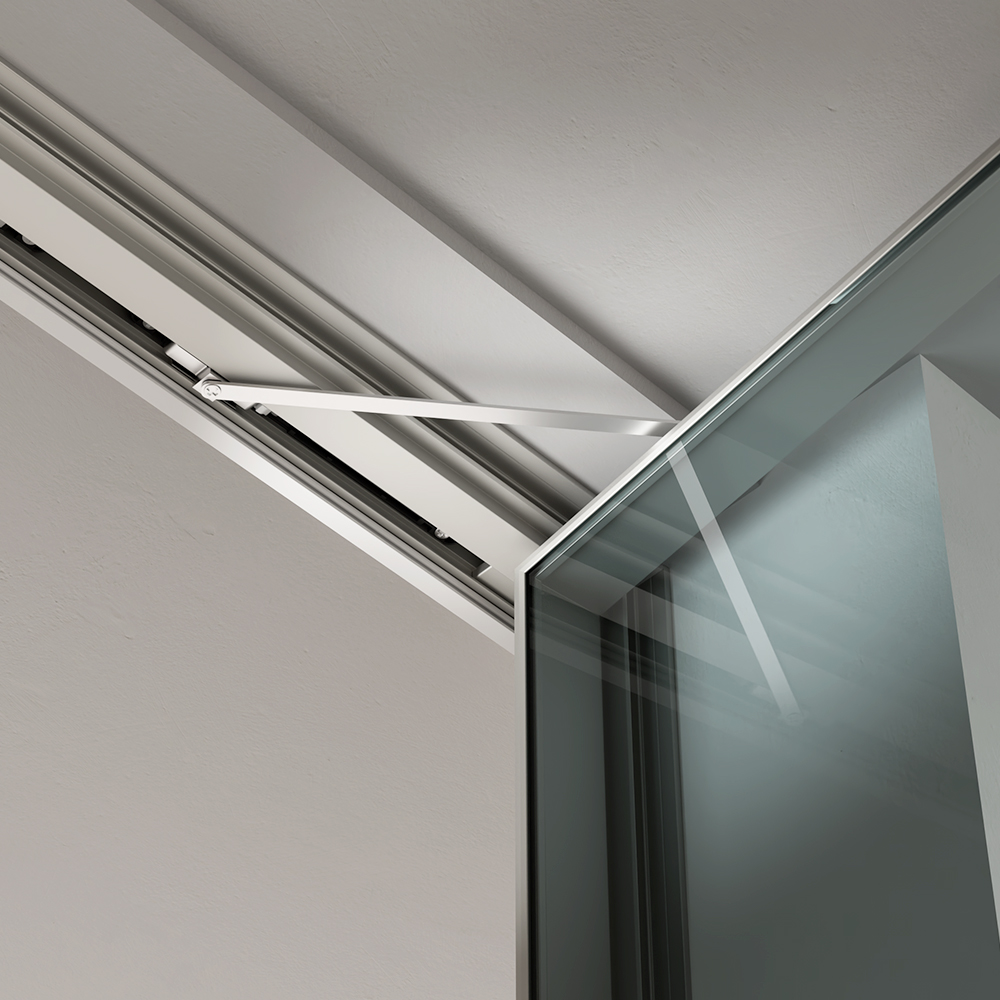
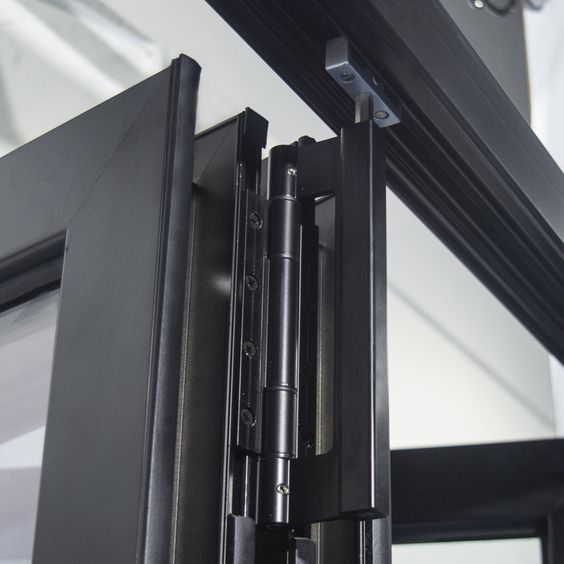
Download the casement door and window profile catalogue (PDF)
A base-material report covers the tested metal sample only; it does not establish U-value, wind, air or water performance of a finished window. Ask for the assembly report and check its size, glazing, opening type and hardware against your project.
Material report L26-WT6629 (22 July 2026) covers a submitted 6060-T66 JNW base-material sample and reports that the 16 inspected items meet GB/T 5237.1-2017. The result applies to that sample only, not every product or finished window. Request the full report; CE or Australian-standard documents are confirmed separately per product.
DoorProfile.com is run by MT Flying (Guangdong Meitong Times Aluminum, also known as Mei Tong Flying), the same Foshan factory behind mtflying.com. Same extrusion lines, same products, same engineers: a quote requested on either site is handled by the same team.
MT Flying lists these as thermal break aluminum profiles on mtflying.com, alongside custom aluminium extrusion. Finished windows here: aluminium double glazed windows.
Polyamide 6.6, usually glass-fibre reinforced. It insulates far better than aluminium, expands at a similar rate, and stays strong at powder-coating temperatures.
Yes: 6063-T5 thermal break profiles on their own, with matching seals and accessories, for local fabrication.
No. Glass, seals, hardware, fabrication and installation all affect the finished window.
Yes. It helps us review geometry, application, finish and supply scope.
Yes. Tell us whether you need profiles, components or finished windows and doors.
Send the application, drawings or opening schedule; we review it before quoting.
Request a quoteWhatsAppmichael@mtflying.com